

Unravelling Stem Cells
In the era of rapid technology advancement, stem cell therapy has gained widespread popularity, particularly among celebrities who are keen to maintain their youthful and flawless appearance. In modern aesthetic treatments, stem cells sourced from animals, plants, and humans each serve distinct purposes in anti-aging treatments.
Animal-derived stem cells, commonly taken from sheep, are known for promoting skin regeneration and collagen-boosting abilities, though they pose ethical and safety concerns. Plant stem cells, extracted from plants rich in antioxidants such as apples, and also well-known cactus and Anona muricata stem cells, which are the key ingredients in our sought-after SCFIII formulation. Plant stem cells' inherent bioactive factors are highly effective in supporting skin regeneration, promoting cellular self-renewal, and stimulating tissue regeneration.
Finally, human stem cells are accessible for harvesting from human tissue such as bone marrow, adipose tissue, and umbilical cord. It possesses similar morphological properties and physiological compatibility that highly resemble the human body, and is capable of differentiating into osteoblasts (bone), chondrocytes (cartilage), tenocytes (tendon), cardiomyocytes (heart), neurons, adipocytes (fat), and a range of other specialized cells. For these reasons, human stem cells are widely utilized in cell therapy and regenerative medicine.
In general, stem cells are “young” cells that are undifferentiated, with the ability to differentiate into a wide range of “mature” cell types (specialized cells). Hence, these exceptional properties of stem cells play a crucial role in tissue repair and regeneration. The fertilized egg is the pioneer stem cells of the human body, experiencing proliferation and differentiation continuously to develop into a complete human being from an embryo. Yet, the proportion of stem cells available within our body diminishesdrastically with age, from 100% stem cells during the embryonic stage to around 1/2 000 000 in the late stage. As the frequency and the ability of stem cells' self-renewal weaken with age, our body will experience a rapid senescence process and therefore the emergence of age-related health issues.
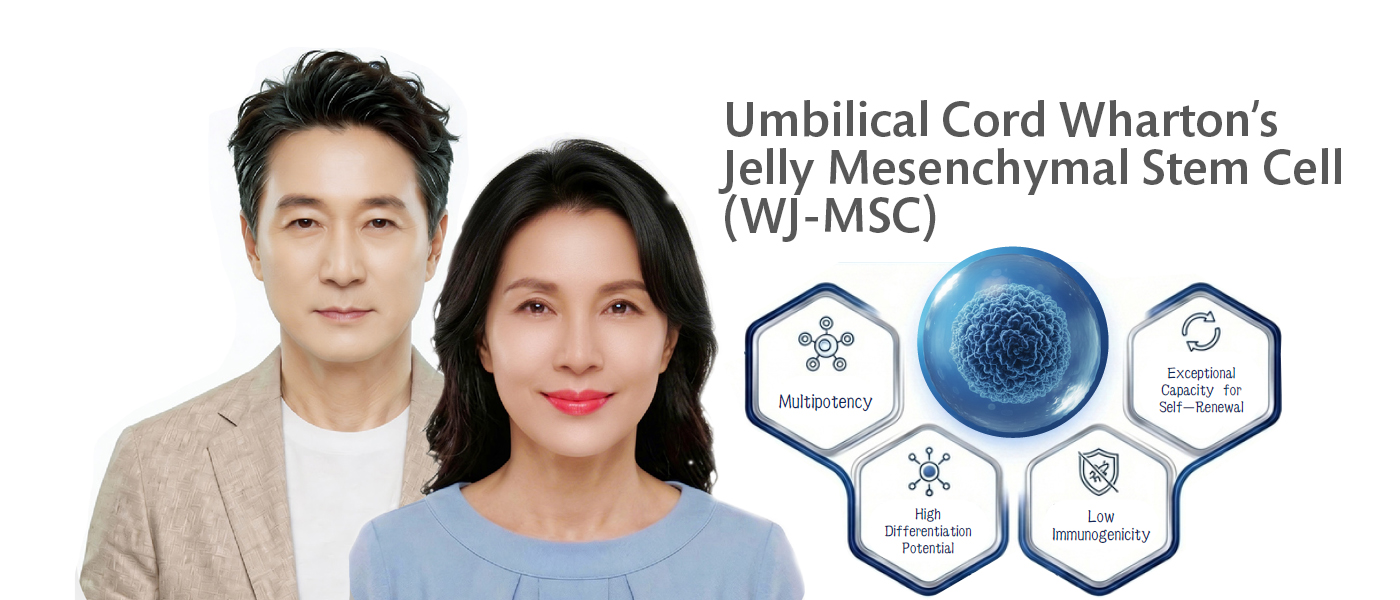
Stem cell therapy is a process of restoring the normal function of organs by replacing and regenerating human cell tissues with stem cells to promote tissue growth and organ healing. In the matter of fact, stem cell therapy encompasses a wide range of cell types, each offering distinct regenerative potential as mentioned before. Among them, Wharton’s Jelly Mesenchymal Stem Cells (WJ-MSC) stand out for their pluripotent nature and unparalleled capacity for self-renewal.
WJ-MSCs are highly noticeable due to the following defining characteristics:
These exceptional properties make WJ-MSCs a popular choice in both health and aesthetic therapy, such as strengthening immune cells, accelerating damaged cell repair, skeletal regeneration, cardiac repair, skin rejuvenation, reduction of wrinkles and fine lines, and enhancement in skin texture and firmness, and improvement in hypertension, hyperlipidemia, hyperglycemia, and other chronic diseases.
Telomeres are protective structures located at the ends of chromosomes, composed of repetitive DNA sequences and associated proteins. They play a crucial role in maintaining genomic stability and ensuring normal cell division by preventing chromosome degradation and aberrant end-to-end fusion.
A 2013 study by Dr. Carlos and his research team at the University of Oviedo, Spain, demonstrated that telomere length progressively shortens with age and with repeated cellular replication. Unfortunately, once telomeres reach a critically short length, they trigger cell cycle arrest, leading to cellular senescence.
Consequently, telomere length is closely associated with aging, immune system function, and the risk of various chronic diseases, and is therefore regarded by the medical community as an important biomarker for assessing biological age and overall health status. Notably, stem cell-based therapies have shown potential in effectively delaying telomere attrition, thereby mitigating aging processes and the onset of age-related diseases.
There are a few protocols for the isolation and cultivation of WJ-MSCs, but enzymatic digestion methods and explant technique stand out. Enzymatic digestion involves the dissection of the umbilical cord's Wharton's jelly, followed by mechanical fragmentation. Collagenase enzyme is then used to dissociate the cells from the extracellular matrix. The resulting cell suspension undergoes filtration and centrifugation before being cultured in a xeno-free culture medium.
On the other hand, the explant technique follows a more natural process. Wharton's jelly is collected, cut into small fragments, and placed directly onto culture dishes, allowing cells to gradually migrate out of the tissue. This process typically takes 7 to 10 days, depending on the cell's condition. The absence of an enzyme in this technique often results in enhanced cell integrity and quality despite slower. All cultured stem cells from either technique are eventually preserved in liquid nitrogen storage tanks at temperatures below - 150 °C for future use.
Every therapy we provide is a personalized treatment plan, tailored specifically to each individual to achieve optimal clinical outcomes according to their personal preferences. Global research into allogeneic stem cell therapy has continued to develop rapidly since 2018. To date, more than 2,000 clinical trials involving umbilical cord mesenchymal stem cells have been conducted worldwide, with over 400 trials focused on medical aesthetics.
In 2022, a study published in Frontiers in Cardiovascular Medicine demonstrated that umbilical cord–derived allogeneic stem cells can effectively repair cardiac damage caused by acute myocardial infarction. What's even better is that this therapy has received approval from the U.S. FDA, authorizing its expansion into clinical trials. There are eight patients have completed this novel treatment, with no reported adverse effects or immune reaction.
These developments are working to make umbilical cord mesenchymal stem cells a transformative, essential therapeutic approach in the future of both medical and aesthetic medicine. Researchers have obtained highly promising data confirming WJ-MSCs' efficacy in enhancing skin health, revealing their capacity to restore youthful skin function and formidable skin rejuvenation and regenerative properties.
Through an integrated analysis of hundreds of clinical studies on stem cells in medicine and aesthetics, it can be concluded that the professional application of umbilical cord mesenchymal stem cells delivers significant improvements in skin quality. The most notable benefits include:
ISO 9001
Product Code: WJ-MSC